
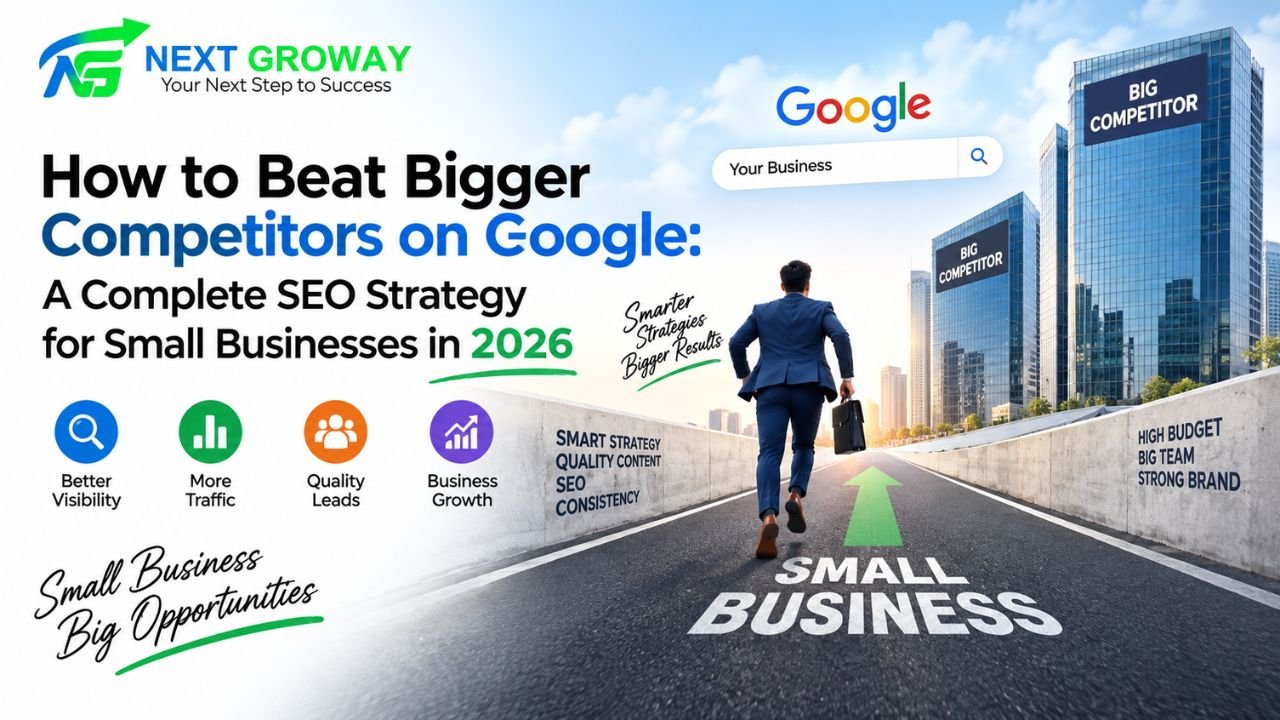
Getting noticed on Google can feel difficult when larger companies have bigger marketing budgets, stronger domain authority, and years of established content. But small businesses do not need to beat big brands at everything. They need to become more relevant for the searches that matter to their customers. A focused SEO strategy for small businesses can help achieve that by combining smart keyword research, useful content, local search optimization, technical improvements, and a strong understanding of customer intent. In 2026, success is increasingly about being genuinely useful and clearly answering what people are searching for not simply publishing more pages than competitors.
Quick Takeaways
Key Takeaway: Small businesses can compete by focusing on relevance, expertise, specific search intent, and underserved topics.
Best For: Local businesses, service providers, startups, professional firms, and growing online businesses.
Common Challenges: Limited budgets, established competitors, low initial authority, and limited content resources.
Expected Benefits: Better organic visibility, qualified traffic, stronger local presence, and sustainable customer acquisition.
Alternatives: Paid search, social advertising, partnerships, email marketing, and referral programs can complement organic SEO.
Expert Tip: Do not try to rank for every keyword. Build authority around a focused group of topics that directly connect with your customers.
Why Is an SEO Strategy for Small Businesses Important Today?
An SEO strategy for small businesses helps smaller companies compete by targeting relevant searches rather than trying to match larger competitors page for page. A focused approach can combine long-tail keywords, local SEO, helpful content, on-page SEO, and technical SEO to attract people who are actively looking for specific products or services.
Search behavior has also become more conversational. People increasingly experiences powered by AI can summarize information from multiple sources, making clear, authoritative, and well-structured content increasingly valuable.
This creates an opportunity for smaller businesses. Instead of targeting an extremely competitive term such as “digital marketing,” a company might create useful resources around specific searches such as “SEO strategy for small businesses in Delhi” or “how to improve Google rankings for a local service business.”
The objective is not simply higher traffic. It is attracting the right traffic people whose search intent matches what the business actually offers.
Who Benefits Most From an SEO Strategy for Small Businesses?
Local Businesses
Restaurants, clinics, agencies, home-service providers, retailers, and other location-based businesses can benefit from local SEO for small businesses. Optimizing location signals, business information, reviews, and Google Business Profile details can help improve visibility for relevant local searches.
Startups and New Businesses
New companies can use focused keyword research to identify less competitive topics and build topical relevance gradually. Long-tail keywords can provide useful starting points while broader authority develops.
Professional Service Providers
Accountants, lawyers, consultants, agencies, designers, technology providers, and other specialists can demonstrate expertise through detailed educational content answering real customer questions.
E-Commerce Businesses
Smaller online stores can compete by focusing on specific product categories, use cases, comparisons, and detailed product information instead of attempting to outrank major marketplaces for every generic product term.
Businesses With Limited Marketing Budgets
SEO can be particularly useful when a business wants to build a long-term acquisition channel without depending entirely on ongoing advertising expenditure.
Top Benefits of an SEO Strategy for Small Businesses
1. Better Targeting
Small businesses can concentrate on specific audiences and search intents. This makes it easier to create content that directly addresses customer problems.
2. Stronger Local Visibility
Local search optimization can connect businesses with people searching for services in a particular city, neighborhood, or service area.
3. Sustainable Organic Traffic
Unlike a campaign that stops generating clicks when its budget ends, useful organic content can continue attracting visitors after publication, although rankings and traffic require ongoing maintenance.
4. Greater Credibility
Detailed guides, original insights, transparent information, author expertise, customer experiences, and trustworthy business information can strengthen perceived credibility.
5. Better Understanding of Customers
Keyword research reveals the questions, problems, comparisons, and concerns people have before making decisions. Those insights can improve not only SEO but also website content and marketing.
6. More Efficient Content Investment
A smaller business does not necessarily need hundreds of articles. A carefully planned group of authoritative pages can cover important customer journeys more effectively than large quantities of repetitive content.
Expert Insights and Emerging Trends
SEO in 2026 is broader than traditional keyword optimization. Search engines and AI-powered search experiences increasingly need to understand entities, context, relationships, intent, and content quality.
AI-Assisted Research
AI tools can help businesses identify content gaps, organize research, generate topic ideas, analyze questions, and find patterns in search behavior. However, AI-generated drafts still need human review, fact-checking, first-hand insights, and meaningful editing.
Search Intent Matters More Than Exact-Match Keywords
A page written around a keyword without answering the underlying question may struggle to satisfy users. Businesses should understand whether someone is researching, comparing, evaluating, or ready to purchase.
First-Hand Expertise Is Valuable
Real examples, original observations, customer questions, case studies, expert commentary, and practical experiences can make content more useful than generic articles repeating information found elsewhere.
Conversational Search Is Growing
Content should naturally answer questions such as:
How can a small business improve Google rankings?
What SEO strategy works with a limited budget?
How long does small business SEO take?
How can a local business attract customers from Google?
Clear answers can make content easier for both users and search systems to understand.
How Does a Small Business SEO Strategy Compare With Other Marketing Options?
Organic SEO
Best suited for: Businesses building long-term search visibility.
SEO can gradually create an asset of useful pages and organic visibility, but it requires consistent research, content development, optimization, and measurement.
Paid Search
Suitable for: Businesses seeking immediate visibility for selected commercial searches.
Paid advertising can generate traffic quickly, but visibility generally depends on continued advertising investment.
Social Media Marketing
Ideal for: Brand awareness, community engagement, visual content, and audience interaction.
Social platforms can complement SEO by helping businesses distribute content and build relationships with potential customers.
Content + SEO
Suitable for: Businesses with expertise that can be converted into genuinely useful educational resources.
Combining content with technical, on-page, and local SEO allows businesses to address customers throughout the research journey.
For many businesses, these channels can work together rather than being treated as mutually exclusive choices.
Best Practices for Better SEO Results
Start With Focused Keyword Research
Build a keyword list around products, services, customer problems, locations, comparisons, and frequently asked questions. Prioritize relevance and search intent over volume alone.
Build Topic Clusters
Instead of publishing disconnected articles, create a central resource supported by related pages. Internal links can help users and search engines understand the relationship between topics.
Strengthen On-Page SEO
Review page titles, headings, URLs, internal links, image descriptions, introductory sections, and content structure. Make every page clearly communicate what question it answers.
Improve Google Business Profile Optimization
For eligible local businesses, keep business information accurate and complete. Add relevant services, maintain current details, respond appropriately to reviews, and publish useful updates where appropriate.
Invest in Technical SEO
Regularly check indexing, crawlability, site speed, mobile experience, redirects, broken links, structured data where relevant, and overall website architecture.
Create Content Around Real Questions
Talk to customers, sales teams, support staff, and industry professionals. Their questions can reveal valuable content opportunities that standard keyword tools may not fully capture.
Measure Meaningful Results
Monitor more than rankings. Review organic conversions, qualified leads, engagement, search queries, landing-page performance, and local visibility to understand whether SEO is contributing to business goals.
Businesses looking for additional digital marketing perspectives can also explore educational resources from nextgroway while developing their broader search strategy.
Frequently Asked Questions
1. Can a small business compete with bigger companies on Google?
Yes. Small businesses can compete by focusing on highly relevant topics, long-tail keywords, local searches, specialized services, and strong customer-focused content. Instead of attempting to outrank large companies for every broad keyword, they can build visibility around searches where their expertise and location provide genuine relevance.
2. What is the best SEO strategy for small businesses?
A practical strategy usually combines keyword research, helpful content, on-page SEO, technical SEO, internal linking, local SEO where applicable, and regular performance analysis. The priorities should be based on the business’s audience, competition, location, website condition, and commercial goals.
3. How can a small business improve Google rankings?
Start by identifying relevant search queries, improving existing pages, creating genuinely useful content, fixing technical SEO problems, strengthening internal links, and improving local signals when appropriate. Consistently satisfying search intent is more sustainable than relying on keyword repetition or shortcuts.
4. Are long-tail keywords useful for small businesses?
Yes. Long-tail keywords are usually more specific and can reflect clearer search intent. They may have lower search volume than broad keywords, but they can attract visitors looking for a particular solution, service, product, or location.
5. How important is local SEO for small businesses?
Local SEO can be highly important for businesses that serve customers in specific geographic areas. Accurate business information, Google Business Profile optimization, relevant local content, reviews, and consistent location signals can help businesses appear for appropriate local searches.
6. How long does small business SEO take to work?
There is no universal timeline. Results depend on competition, website authority, technical health, content quality, search demand, and the consistency of SEO work. Some improvements can appear relatively quickly, while meaningful growth in competitive markets can take considerably longer.
7. Should small businesses focus on SEO or paid advertising?
The answer depends on the business objective and available resources. Paid advertising can provide faster visibility, while SEO is generally a longer-term investment in organic visibility. Many businesses use both, with paid campaigns supporting immediate priorities while SEO builds sustainable search presence.
8. How does AI affect SEO for small businesses?
AI is changing how people discover and consume information, but fundamental principles remain important: useful information, clear answers, trustworthy sources, strong expertise, and technically accessible websites. Businesses should create content that is genuinely valuable rather than producing large volumes of generic AI-generated pages.
9. What is the most common small business SEO mistake?
One common mistake is trying to compete for broad, highly competitive keywords without considering search intent or the business’s actual strengths. A more focused strategy can identify specific customer needs where the business can provide genuinely useful and differentiated information.
Conclusion
A successful SEO strategy for small businesses is not about copying the tactics of companies with larger budgets. It is about identifying where a smaller business can provide greater relevance, expertise, specificity, and local value. From keyword research for small businesses and long-tail opportunities to technical SEO, helpful content, and local search optimization, each element should support a clear customer journey. Businesses should also monitor how search behavior evolves as AI-powered search and conversational queries become more common. The strongest approach is usually consistent rather than complicated: understand your audience, solve their real questions, improve your website, measure meaningful outcomes, and update your strategy as search behavior changes. Small businesses can explore expert resources from nextgroway and continue researching before choosing the right approach for their goals.